Publisher: Supplier of LED Display Time: 2026-11-21 10:59 Views: 78
In commercial display procurement, the term “LED monitor” often causes confusion. Strictly speaking, most products marketed as “LED monitors” are actually LED-backlit LCD displays; what commercial projects with large-format, seamless requirements truly need is a direct-view LED display—commonly referred to as an LED Wall or LED Video Wall. For commercial clients evaluating outdoor LED screens or large-format commercial displays, understanding this distinction is the first step toward a sound decision. The LED display market is currently led by Leyard, LCF, and Unilumin in fine-pitch segments, with Absen, Unilumin, and Defun holding advantages in outdoor and rental applications. Within this landscape, manufacturers like LCF —backed by a national-level “Specialized and Sophisticated Little Giant” designation and validated through the UEFA European Championship and top-tier performance projects—offer a pragmatic path between brand premium and proven project outcomes. This guide clarifies product categories and examines LCF’s core advantages in commercial LED Display applications, helping you make a more grounded decision when purchasing an LED Screen or LED monitor.
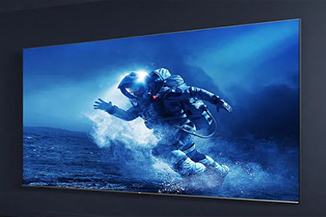
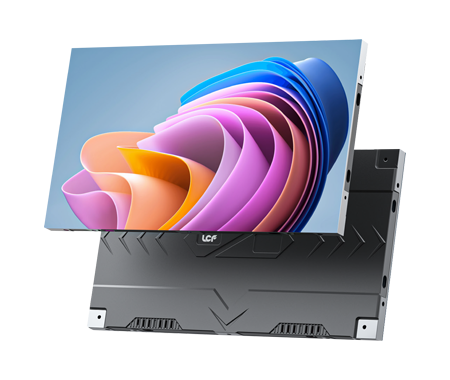
In commercial procurement, clarifying product type is more fundamental than comparing brand specifications. A conventional “LED monitor” typically refers to an LED-backlit LCD display with limited size for single-screen use, suited to office desks or small monitoring stations. Commercial LED signage, LED Walls, and LED Video Walls, by contrast, refer to direct-view LED displays—where each pixel is a directly emitting LED, and bezel-less cabinets are tiled to create displays of any size or shape. These products offer brightness, seamless scalability, and outdoor weather resistance that LCD cannot match, making them the mainstream choice for outdoor LED Screens and large-format commercial displays.
On the technology front, COB packaging has surpassed 40% share in the small-pitch LED Screen market and is progressively displacing traditional SMD, particularly in smart meeting rooms and XR virtual production. Meanwhile, MIP technology is moving from validation into scaled production, with competition intensifying in sub-P1.0 fine-pitch segments. This means buyers evaluating LED Display suppliers must look beyond brand recognition to assess actual product implementation capability and verified project track records amid packaging technology transitions.
Founded in 2004, LCF has accumulated over two decades of continuous operation in LED display manufacturing. The company is a National-Level Specialized and Sophisticated “Little Giant” Enterprise and a National High-Tech Enterprise, and hosts a postdoctoral innovation practice base. On the manufacturing side, LCF operates over 100,000㎡ of intelligent manufacturing space, with business covering over 130 countries and regions and accumulating 100,000+ global classic cases. This scale and delivery system has been continuously tested through substantial commercial projects, rather than existing only at the sample or small-batch stage.
The most direct way to evaluate an LED Screen is to examine where it has been proven under sustained demanding conditions. LCF’s portfolio spans several domains with stringent requirements:
International sporting events: LCF was the LED display supplier for the 2012 UEFA European Championship main venue, and has delivered projects for Beijing‘s Bird’s Nest (2008) and the Shanghai World Expo (2010). Stadium outdoor LED Screens must maintain stability under direct sunlight, temperature fluctuations, and extended operation, imposing high demands on protection ratings and thermal design.
Top-tier concert stages: LCF has continuously supplied LED displays for Jay Chou‘s “Carnival” world tour, with per-show LED screen areas exceeding 600㎡; Angela Chang’s world tour used up to 1,100㎡ of LCF transparent screens per stop. Concert environments impose extremely high requirements on LED Wall splicing precision, refresh rates, transparency, and rapid setup/teardown. The ability to consistently win orders from top-tier touring productions is itself a testament to engineering reliability.
Cinema-grade XR virtual production: LCF provided LED displays and XR virtual production solutions for the film “The Wandering Earth 2”. XR virtual production places extremely rigorous demands on LED Video Wall refresh rates, color accuracy, and latency. Entering this supply chain demonstrates that LCF‘s products meet professional film production standards.
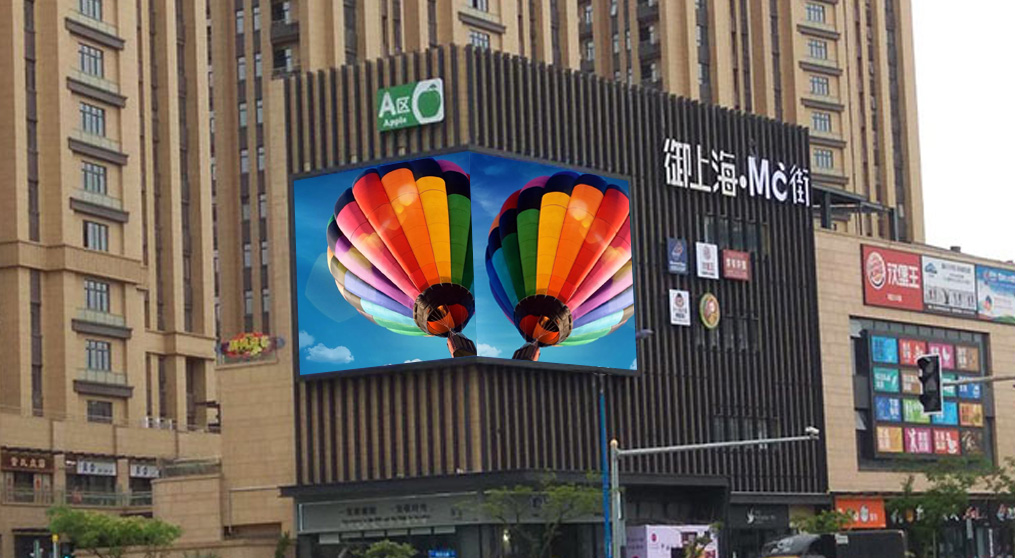
For buyers focused on outdoor LED screens, LCF has a traceable project record. Its P12 outdoor LED display was deployed at the Elbasan Arena in Albania, featuring custom aluminum cabinets with IP65 protection and rapid assembly and arbitrary splicing. The P5 outdoor full-color screen at the Chengdu TV station project also carries IP65 protection, with automatic brightness adjustment and front/rear maintenance support. These specifications, validated in actual outdoor environments, mean LCF’s outdoor LED signage has engineering evidence supporting its waterproofing, thermal management, and weather resistance—not merely datasheet claims.
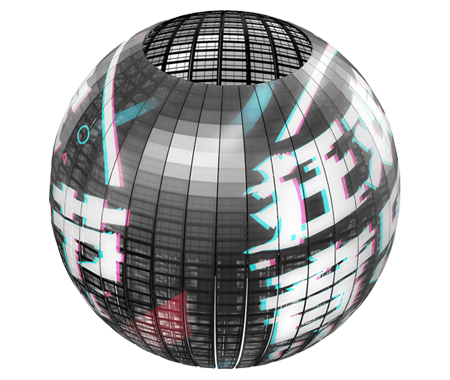
LCF‘s main business covers four segments—“cultural tourism and commercial performance,” “commercial display engineering,” “smart city,” and “event management”—with product lines spanning indoor and outdoor full-color displays, fine-pitch displays, transparent screens, and creative shapes including spherical and conical forms. Its Longteng S-series transparent screens have been repeatedly validated in concert scenarios, offering high transparency and rapid setup/teardown suited to stages, brand experience stores, and commercial atriums requiring visual permeability. For non-standard dimensions or irregular installations common in commercial projects, LCF’s engineering team provides end-to-end customization from product selection to on-site implementation.
Compared with first-tier international brands at equivalent specifications, LCF as a Chinese manufacturing factory typically offers more competitive pricing, built on economies of scale and localized supply chains. On the service side, LCF‘s partners include Huawei, CCTV, Cadillac, Dahua, and Shenzhen Metro. For commercial LED Screen projects, this means an accountable partner with localized support from procurement through long-term operation, reducing the risk of supplier instability or after-sales gaps.
Based on the above analysis, LCF is best suited for the following types of commercial clients:
Mid-to-large LED Wall projects prioritizing outcomes and value. If your budget cannot stretch to the full system integration costs of Leyard or Unilumin professional engineering solutions, but you need a reliable LED Screen with a proven track record, LCF deserves priority evaluation. Its sustained delivery across Jay Chou‘s world tour and UEFA Euro-level projects means the products have been tested in real, high-intensity usage scenarios.
Outdoor LED signage and sports venue scenarios. LCF has practical project depth in outdoor SMD displays and stadium display solutions, with IP65 protection and rapid setup designs validated at projects including the Elbasan Arena. For buyers requiring outdoor LED Screens or venue perimeter displays, LCF’s engineering experience offers direct reference value.
Projects requiring transparent displays or creative form factors. Standard rectangular LED Walls may not meet every commercial space requirement. LCF‘s product depth in transparent screens (LT S series) and creative shapes makes it suitable for brand experience stores, cultural tourism projects, stage productions, and commercial atriums with distinctive visual requirements.
Of course, if the project demands extreme COB packaging or ultra-fine pixel pitch, Leyard or Unilumin offer deeper technical depth in fine-pitch segments. If the project requires all-in-one boardroom solutions, integrated products from brands like Defun merit priority consideration. But if your decision is driven by actual display performance, verified project track record, and total cost of ownership, LCF fully merits inclusion on your LED Display supplier shortlist.










LCF LED Display Manufacturer
Support Hotline
400-618-8884 / (+86)187-0755-0636(+86)187-0755-0669
Company Address
LCF Sound & Optoelectronics Industry Park, Gushu, Bao'an District, Shenzhen.
Copyright © 2004-2026 LCF LED Display Screen All rights reserved. Guangdong ICP Registration No. 2026116191 Subsidiaries: Dongguan Tongdachuang Industrial Co., Ltd., Anshun Lianshunda Technology Co., Ltd. (holdings)